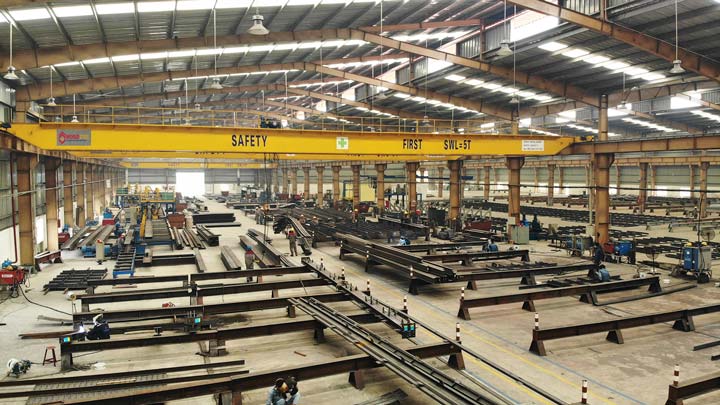
Steel fabrication is a crucial process in the construction and industrial sectors, requiring high precision and quality to ensure the safety and durability of structures. To meet these requirements, the fabrication process must adhere to various factors, from design and material selection to fabrication techniques and quality inspection. This article will provide a detailed guide on how to accurately and effectively fabricate steel structures, helping you understand the necessary steps to achieve the best results.

Design and Planning
Designing steel structures is the first and most crucial step in the fabrication process. The design must be detailed, clear, and accurate, including specifications such as dimensions, shapes, and the type of steel used. This requires close collaboration between design engineers and fabricators to ensure that all technical requirements are met.
After completing the design, the next step is to plan the fabrication. This plan includes determining the fabrication stages, completion timelines, and assigning tasks to the relevant departments. A detailed plan helps optimize the fabrication process, minimize errors, and ensure that work progresses on schedule.
Material Selection
- Select the Appropriate Type of Steel: Selecting the appropriate type of steel is crucial to the quality of steel structures. Common types of steel used in fabrication include carbon steel, alloy steel, and stainless steel. Each type has distinct properties regarding strength, load-bearing capacity, and corrosion resistance. Therefore, the choice of steel must be based on the specific requirements of the project and the environmental conditions.
- Material Quality Inspection:Before fabrication begins, all materials must undergo quality inspection to ensure they meet technical standards. This includes checking dimensions, shapes, strength, and corrosion resistance of the steel. Employ modern inspection methods such as ultrasonic testing, magnetic testing, and destructive testing to ensure the materials are of the highest quality.

Fabrication Techniques
Cutting and bending steel are fundamental techniques in the steel fabrication process. Steel cutting should be performed using modern cutting machines, such as plasma cutters and laser cutters, to ensure precise and smooth cuts. Bending steel requires skill and accuracy to achieve the specified angles without causing distortion or damage to the material.
Welding is a crucial step in steel fabrication, determining the strength and integrity of the steel components. Advanced welding methods such as MIG and TIG welding should be used to achieve strong and smooth welds. Welders must possess high skill and experience, adhering to strict welding procedures to ensure the quality of the welds
Quality Inspection and Assessment
Visual Inspection
After completing the fabrication process, visual inspection is the first step in assessing quality. This involves checking welds, cut edges, and the surface of the steel to identify defects such as cracks, warping, or rust. Visual inspection helps to detect issues early, allowing for timely repairs.

Non-Destructive Testing (NDT).
Non-destructive testing (NDT) methods such as ultrasonic testing, magnetic testing, and radiographic testing are used to assess the quality of steel structures without damaging the material. NDT helps detect internal defects such as voids and cracks that are not visible to the naked eye. This is a critical inspection step to ensure that steel structures meet the highest quality standards.
Maintenance and Repairs.
- Routine Maintenance: Routine maintenance is essential for maintaining the quality and durability of steel structures. Maintenance measures include regular inspections, surface cleaning, protective coating application, and weld checks. Routine maintenance helps identify issues early and prevents the deterioration of the steel structure.
- Repairs and Remediation: When defects or damage are detected during inspections, repairs and remediation must be carried out immediately. Repair measures include re-welding joints, replacing damaged steel sections, and reapplying protective coatings. Utilizing modern techniques and equipment ensures that repairs are effective and do not compromise the overall quality of the steel structure.

Accurate and high-quality steel fabrication is a complex process that requires attention to detail at every stage, from design and material selection to fabrication techniques, inspection, and maintenance. To achieve the best results, it is essential to adhere to strict technical procedures and utilize modern technologies. Investing in workforce training and equipping advanced machinery also plays a crucial role in enhancing the quality of steel fabrication.
